About Us
MEZHŪR HIGHER SECONDARY SCHOOL
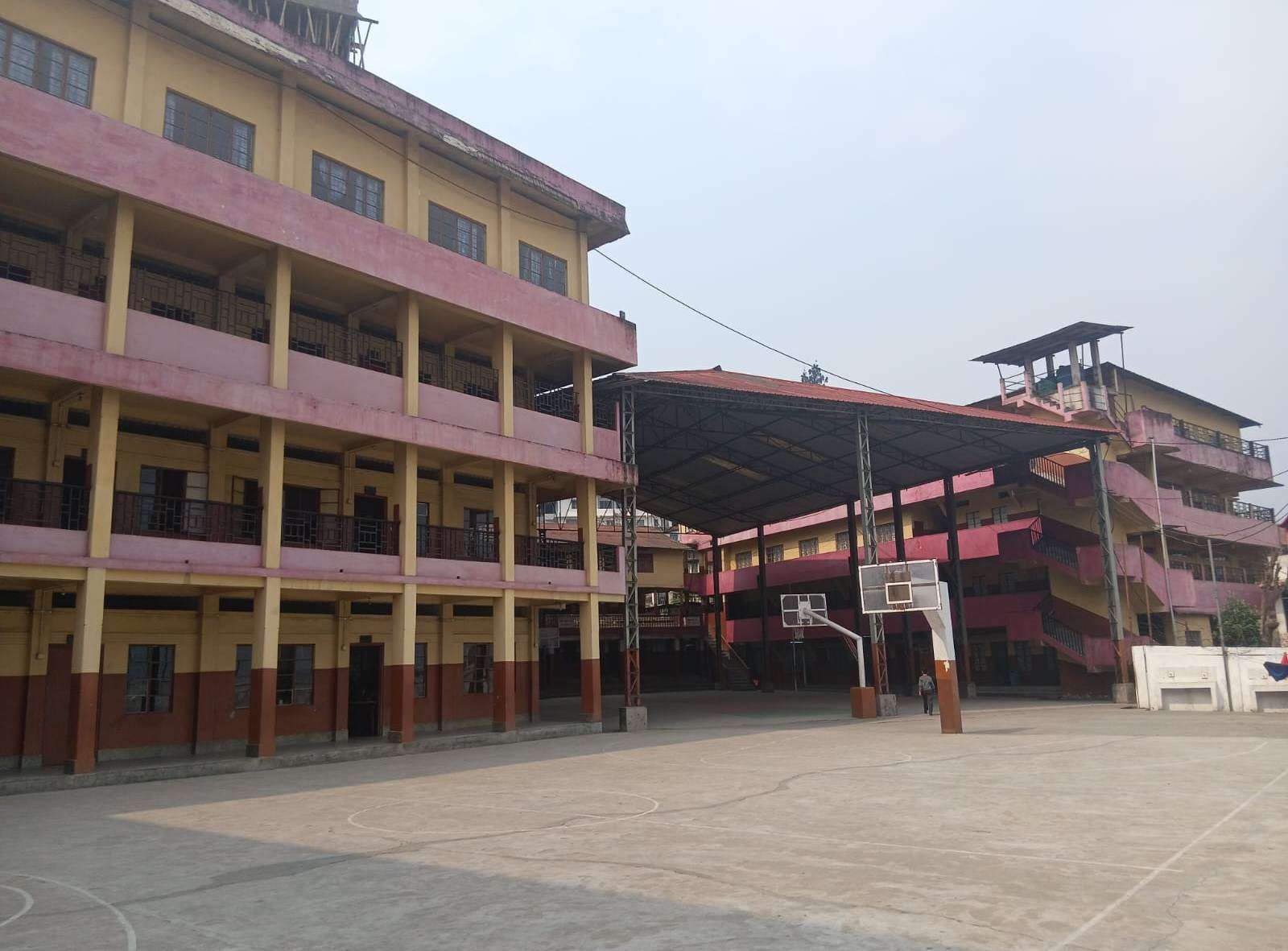
Mezhür Higher Secondary School (Affliated to Nagaland Board of School Education) was founded on 18th August, 1958 by Samuel Mezhür Sekhose. It was named Little Flower School until 1962 when it was renamed Kohima English School. Since then, the name Kohima English School has remained synonymous with thousands of alumni. In 1998 the State Government introduced a regulation wishing that the word” ENGLISH” be removed from the name of all schools in Nagaland and the new nomenclature MEZHUR HIGHER SECONDARY SCHOOL was given in memory of the founder.
Mezhur Higher School is one of the oldest educational institutions in the state of Nagaland Location in the heart of Kohima, Mezhür Higher Secondary School has produced a generation of eminent professionals who are leaders in their own society.
More popularly known as Kohima English School, the school since the time of its inception from humble beginnings of just a handful of students sitting in a small class room , it has emerged to become one of the biggest and most successful educational institution in Nagaland.
Our Mission
Our Mission
At Mezhur Higher Secondary School, our mission is to provide a nurturing and intellectually stimulating environment that fosters academic excellence, moral integrity, and holistic development. We are committed to shaping responsible citizens who are equipped with knowledge, empathy, and the courage to make a positive impact in the world.
We strive to empower our students with the skills and values necessary to thrive in an ever-changing global society while preserving the cultural richness of our land.
 To provide quality education rooted in academic excellence and ethical values
To foster critical thinking and problem solving abilities
To encourage respect and social responsibility
To promote a lifelong love for learning and personal growth
To prepare students for higher education and global citizenship
To provide quality education rooted in academic excellence and ethical values
To foster critical thinking and problem solving abilities
To encourage respect and social responsibility
To promote a lifelong love for learning and personal growth
To prepare students for higher education and global citizenship
To provide quality education rooted in academic excellence and ethical values
To foster critical thinking and problem solving abilities
To encourage respect and social responsibility
To promote a lifelong love for learning and personal growth
To prepare students for higher education and global citizenship

Our Teachers
Meet Our Skilled Educators
The Institute has one of the most experienced and well-qualified faculty in the State, specialized in varied disciplines. The faculty which includes teaching as well as non-teaching staff is also constantly exposed to new developments such as teaching methodologies, evaluation techniques etc. through constant participation in seminars and workshops to enhance the quality of education imparted to the students.

Priya Lohar
MA
Kethoneinuo Suokhrie
MA, D.El.Ed
Keneingunuo Solo
BA
Krecheni Krechena
MA
Roshon Rana
B.Sc, B.Ed
Sawan Maddesia
MA
Rampratap Prasad
B.Sc
Temjentoshi Yuden
B.Sc
Mothsuni Pfotte
MA, B.Ed
Sevotalu Poru
M.Com

Nourhekhotuo Liezietsu
B.Sc
Edroom Support
MA
Vijakho-u Peseyie
BA, BEd